covid-19
update

Our Blog

Happy New Year!

January 5th, 2023

Happy New Year from all of us at Simsbury Pediatric and Adolescent Dentistry!

In 2023, we are looking forward to exploring our new goals, refreshing some of our spaces, and greeting new team members.

2023 will bring on some new changes as well. We recently installed a CBCT scanner which will enable us to capture much more detailed images. Our team is looking forward to using it on patients very soon and continuing to provide the best possible treatments!

We also have some new faces in the office! Please join us in welcoming Jennifer and Courtney. Jennifer is at the front desk and Courtney is our newest hygienist. Welcome! If you’re looking to join our team, feel free to call the office at 860-658-7548 or email Pat at pat@simsburychildrensdentistry.com to hear about our openings.

Not everything is changing this year. We have not made any changes to our hours, however, please keep in mind that we are closed on Wednesdays. We do monitor the weather and if hours change due to weather conditions, we will reach out to you.

Appointments are best booked by calling during normal business hours, although you can request an appointment directly on our website. After submitting the form, a team member will call you back shortly. We also have a live chat line where you can request a call back as well.

If your child has an emergency during normal business hours, please call us ASAP.  Try to get pictures if possible and, if a tooth gets knocked out, put it into a container with milk right away. If something happens after hours, we do have an emergency line where you can leave a message, and someone will call you back. We are not able to accommodate walk ins. If necessary, seek medical attention at an urgent care center or the ER. Do not delay in getting help for your child if it is an emergency.

Many insurance companies begin benefits at the start of the year. If you have ANY changes to your dental insurance, please let us know ASAP, even if it is a few months before your child's dental appt. It is your responsibility to know your dental plan and to let us know if your insurance situation has changed.

We hope you all had a great start to the new year, and we can’t wait to see you at your next appointment!

What Are Dental Sealants?

January 4th, 2023

You’re constantly playing defense. Your child spends two minutes in the morning and two minutes at night carefully brushing and flossing with a fluoride toothpaste. You make sure sugary and acidic foods are not a major part of your diets. Your child visits our Simsbury, CT office for regular exams and cleanings. Really, how can a cavity get past all that?

But even with the best defensive practices, you don’t have a level playing field—literally. The tops of our molars and premolars don’t have the smooth, easy-to-clean surfaces that our other teeth have. If you look at the chewing surfaces, you will notice deep grooves which toothbrush bristles have a much harder time reaching.  

Plaque and food particles can become trapped in these grooves (known as pits and fissures), providing perfect conditions for a cavity to develop. That is why cavities are so common in newly erupted molars. Dental sealants protect these teeth from cavities by providing a barrier which smooths out the surface of the tooth and prevents food and bacteria from reaching the molar’s crevices.

Most sealants are invisible plastic resin coatings which we apply in our Simsbury, CT office. Usually the procedure is so quick and easy that no dental anesthetic is required. Each tooth will be examined first. If we find any signs of early decay, we will gently treat that area before beginning.

When the tooth is ready, it will be cleaned and dried. An etching solution will be brushed on to the dry surface to roughen the area a bit so that the sealant will hold to the tooth more effectively. A thin coat of the sealant is then painted on and hardened under a curing light. And that’s it!

Once teeth are sealed, they should be cleaned and flossed just as carefully as before. Regular exams and cleanings are still very important, and we can monitor the condition of the sealant and the sealed teeth. Properly applied, sealants can last from three to five years, or even longer.

Who should consider sealants? Sealants are typically recommended when the permanent molars first erupt. Children’s enamel takes a while to become its strongest, and so these just-erupted teeth are more at risk for cavities. Sometimes Dr. Maryam Azadpur will recommend sealants for primary (baby) teeth if needed. But even adults can benefit—talk to us if you are interested and we will let you know if sealants might be right for you.

Sealants are a simple, safe, and minimally invasive way to prevent cavities. Studies of sealed molars and premolars show a dramatic reduction in cavities compared to untreated teeth. Sealants are one of the most effective ways to defend your teeth or your children’s teeth from tooth decay. And as we’ve all heard—defense wins championships!

Mouthguard Protection

December 28th, 2022

Let’s talk about mouthguards and night guards—two crucial appliances that protect your child’s teeth and jaw.

We could talk about how important a mouthguard is when your family leads an active life. Mouthguards protect teeth, delicate mouth tissue, and jaws from accidents and impacts. 

Or if someone in the house grinds his or her teeth at night, waking up every morning with tooth or jaw pain, we can talk about how a night guard can be a quality-of-life-saver.

But we’re not going to talk about any of these important topics today. Instead of looking at how a guard protects your child, today we’re going to look at how you can help children protect their mouthguards.

If you want their guards to last longer, work better, and stay (and smell!) cleaner, some basic tips make all the difference. Here are some important rules to share with your child.

  • Keep your guard clean.

This can’t be stressed enough. Without a good cleaning routine, your guard can become discolored, develop an unpleasant odor, and even cause illness. Not very appealing, right? Happily, keeping mouthguards and night guards clean isn’t difficult.

When you wear your guard, whether during daytime activities or through the night, the same plaque that is present in your mouth makes itself at home your guard. And when your night guard or mouthguard is in its case, that dark, moist environment makes it a perfect breeding ground for all kinds of bacteria, viruses, and fungi.

As soon as you take your mouthguard out, rinse it off. Brush with a soft toothbrush to remove all the plaque, saliva, or food debris that might be lingering in your appliance. (If you are on the playing field, in the park, or at some other inconvenient location, rinse it and brush as soon as you can.) Toothpaste can help get your guard its cleanest, but can be too abrasive for some appliances.

Once you’ve cleaned it, let your guard air dry in a clean spot for about 30 minutes. Air drying helps prevent bacterial growth. After your guard has dried, return it to its case.

Once a week, you might need to give your guard a good soak in a mouthwash or other dental cleaning solution.

Since cleaning instructions can be different depending on which type of guard you have, be sure to follow our instructions if you have a custom guard, or follow the manufacturer’s cleaning instructions if you have a store guard.

  • Keep it safe.

When your guard isn’t in your mouth, it should be in its case. Floating loose on the bathroom counter or tumbling around in your gym bag puts your guard at risk for breakage and bacteria.

And don’t forget to clean your case thoroughly every few days and air dry it as well. Bacteria, viruses, fungi, mold, and other unwelcome guests can collect in your case, too.

  • Keep it only as long as it’s in good condition.

You can purchase mouthguards from sporting or drug stores, or Dr. Maryam Azadpur can make a mouthguard or night guard designed to fit your teeth perfectly. These appliances are made to be strong and durable, but they’re not indestructible. Over time they can wear down or become damaged, especially if you treat them carelessly.

Bacteria can lurk in dents and cracks, and you can cut your mouth on rough, sharp, or broken edges. But if your guard isn’t fitting properly, don’t resort to self-help! Trying to repair, reshape, or trim your appliance yourself is not a good idea, because it might affect its fit and protective ability.

Any sign that your guard isn’t fitting properly or shows signs of wear and tear could mean it’s time for a replacement. You can replace a store model, or ask our Simsbury, CT team about repairing or replacing your custom guard. A mouthguard that doesn’t fit, doesn’t keep you safe.

Take care of your guard, and it will take care of you. The reward for the small amount of time and effort you put into caring for your mouthguard or night guard is a smile that will last you for a lifetime. That’s a benefit we can talk about all day!

Should You Be Concerned about Your Child’s Bad Breath?

December 21st, 2022

The short answer to this question? Yes. Because your child’s breath is a reflection of his or her oral health, you should talk to Dr. Maryam Azadpur if you notice any unpleasant changes. While better dental hygiene is usually the answer for young children, bad breath can also be a symptom of more serious problems.

Oral Hygiene

Most often, bad breath is simply a sign that your child needs a little help developing proper brushing and flossing habits.

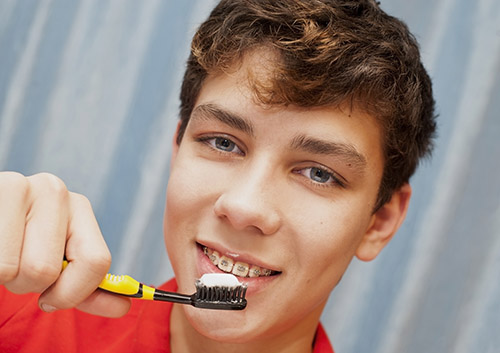
  • Show your child how to use a soft-bristled brush that fits in the mouth comfortably, be sure to brush all the surfaces of each tooth, and don’t forget to angle toward the gum line. And brush long enough. Once all the baby teeth have arrived, two minutes of brushing is usually recommended for children.
  • It’s not too early to floss! Adults need to handle the flossing duties for children until they can manage on their own, so it’s a perfect time to teach technique. And, just like toothbrushes, floss should be flexible and soft.
  • Don’t forget the tongue. Our tongues harbor the bacteria that cause bad breath, so finish off your child’s routine with a gentle brush of the tongue.

Better oral habits mean not only fresh breath, but give those baby teeth the best chance of staying healthy until they are naturally replaced by adult teeth. After all, baby teeth not only help your child learn to eat and speak properly, but they act as necessary placeholders so the permanent teeth are able to erupt in exactly the right spot.

Talk to a member of our Simsbury, CT office team at your child’s next appointment if you are concerned about oral hygiene–they have many great suggestions for making brushing and flossing more efficient, comfortable, and even fun for your child.

Smiling People Smiling People
(860) 658-7548
381 Hopmeadow St #202
Weatogue, CT 06089
Map